Our conscious approach to building is grounded in material, system, and method — all benefitting People, Place, and Planet. The time is now to create beauty, renew community, and share integrity with new methods, materials and relationships.
As part of this, we're regularly intersecting with an abundance of fascinating solutions uniting the science of technology and nature in order to build consciously for the planet, and wanted to share a few with you!
Fighting Fire with Infrasound
The Sonic Fire Defense System created by Sonic Fire Tech uses sound waves to elevate the vibration of oxygen in the air, breaking up the chemical reaction that fuels a fire – completely extinguishing it without any water. This light footprint is easy on the planet, and the silent safety net benefits people, as well. Both portable and home-install versions are available, making the tech available to building and homeowners, and firefighters alike.
Josh Haskell of ABC7 Eyewitness News in Los Angeles covered more about this important story, including a brief interview with our Founder and CVO Drew Pedrick.
Watch the news feature.
Materials out of Mushrooms
Typically we think of buildings as the structures that support people and plants inside of them. But what if plants were actually the supporting basis of our structures?
In Jerusalem, To Grow a Building is utilizing 3D robotics to build structures with materials of soil and seeds. Other organizations such as Mycohab, Redhouse, MIT, along with forward-looking funding sources are creating building materials with mycelium — the root structure of fungi — for form based, insulating, and surface solutions that support our structures and return to the earth when we're finished.
Learn more about mycotecture materials.
Ancient Advancements
Roman "Concrete"
By mixing volcanic ash, lime, and seawater for their cement mixtures, the Ancient Romans created grand structures that have withstood centuries of earthquakes, fires, and floods. Now international researchers are exploring the potential use cases of returning to Roman concrete for construction materials. Modern concrete rusts and expands, forming cracks, but according to engineer at the University of the North in Barranquilla, Colombia, Daniela Martinez, "Studying Roman concrete can teach us how to use materials in a way that can maximize the longevity of our structures, because sustainability goes [hand-in-hand] with durability."
Read more about the ongoing study.
At MCTIGUE, we've been designing projects using Magnesium Cement Board Structural Insulated Panels, which are composed of both magnesium and cement: a new tech version of this ancient "concrete." These panels allow the places made with them to be resilient and fire resistant, while built quickly to last.
Eelgrass
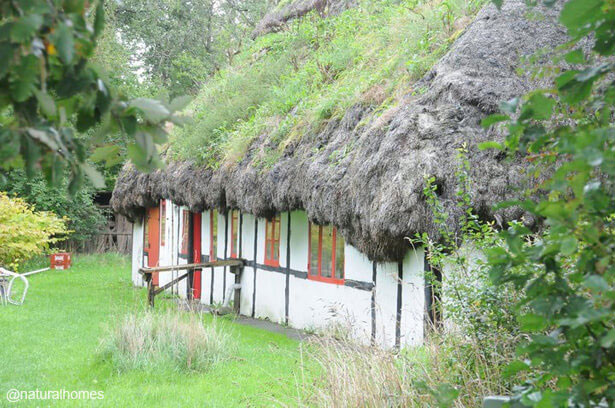
Another example of smartly looking back to continue moving forward can be found on an island off the Danish coast. Here, the roofs of several Lord-of-the-Rings-style cottages are topped with dried eelgrass that has survived over 400 years of time, and weather.
Not only is eelgrass sustainable and strong, it also stores massive amounts of carbon dioxide — benefitting our atmosphere. Kathryn Larsen, Co-Founder of Reef Circular is currently working with others to explore its potential in modern architecture.
"Imagine a building material that is rot resistant, fire resistant, non-toxic, insulates comparably with mineral wool, and can be used to create carbon negative buildings," she told Good Good Good "[T]his material has been used for centuries already around the world — until we forgot how to use it. Eelgrass has an incredible potential as a world-wide building material."
Read the full article here.
At MCTIGUE we've designed spaces to grow plants, have created indoor gardens to improve mental wellness, collaborated on straw-built and other natural construction, built with magnesium panels and 3D printing, and done glazing with inner plant layers. We are very excited to do more work with others in this living, innovative frontier!